
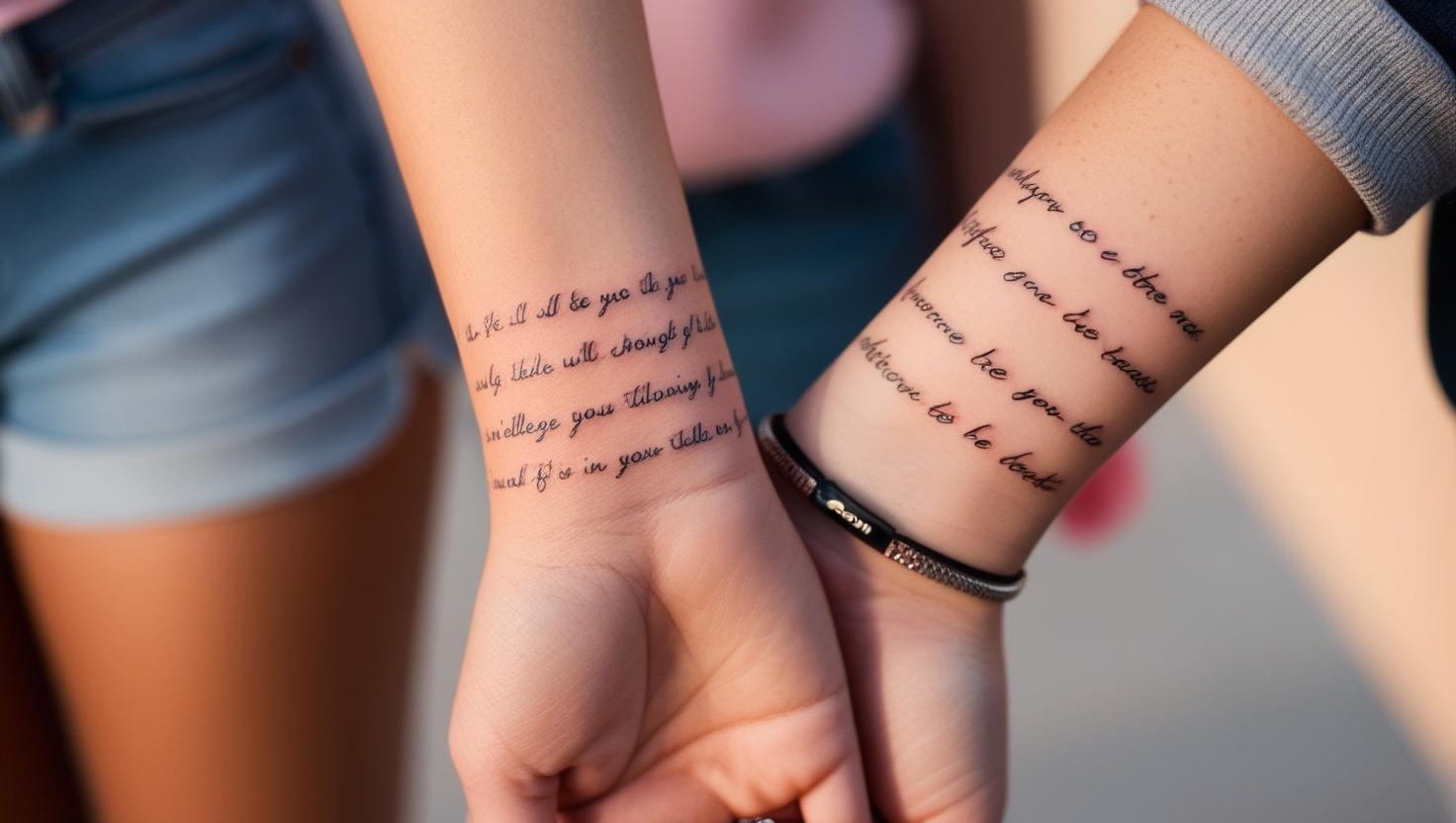
There’s a kind of poetry in pain, in transition, in the quiet chaos of student life. Some of that poetry becomes 3 a.m. notes in your phone, fragments of journal entries, or voice memos you’ll never listen to again. But sometimes, it takes root in something smaller, something permanent. That’s where ink comes in—tiny tattoos that say more than a caption ever could. They’re small, subtle, and often hidden, but they carry entire stories for students who feel more than they let on.
College isn’t just classes and caffeine. It’s late-night breakdowns, identity shifts, friendships that turn into therapy, and the slow, clumsy art of becoming. You’re learning how to be, how not to be, how to fail forward. And in the middle of that mess, you might stumble upon a quote—a sentence, a word—that doesn’t just speak to you. It understands you.
That’s the power of these tiny tattoos that say more. They don’t scream. They don’t need to. They whisper. They hum in script so fine only you notice them until someone asks, “What’s that say?” And even then, maybe you just smile. Because explaining it would ruin it. Because that quote? That’s yours.
Some students get inked after heartbreak. A tiny “still growing” behind the ear. Others mark transformation: “breathe,” “becoming,” “let it hurt.” One med student, exhausted from the pressure, had “trust the process” inked on her wrist—half for motivation, half for survival. It became a mantra every time her hand trembled holding a pen.
There are students who choose words that root them: “home is within,” “stay,” “be here now.” These aren’t just trendy Pinterest quotes. They’re anchors. They’re the words you turn to when everything else feels unstable.
And there’s something defiant in their softness. In a world that rewards performance, these tiny tattoos that say more feel like rebellion—against noise, against burnout, against pretending. They’re honest in a way many students aren’t allowed to be.
One English major had “create yourself” inked on her ribcage. Not because she had all the answers—but because she didn’t. Because she was tired of waiting to be “figured out.” A freshman, still finding her place, got “enough” tattooed in script so fine it disappeared into her skin unless you looked closely. And that was the point. She wanted to believe it before she let anyone else read it.
These tattoos live in intimate places: on wrists, ribs, behind ears, along collarbones. They’re private poetry, declarations of identity, reminders to hold on. “This too shall pass,” said one in a language the wearer no longer spoke fluently, but still understood in her bones. “It is what it is,” etched lightly on an ankle, became a post-breakdown mantra for a student who finally stopped chasing perfection.
A nonbinary student once chose “soft chaos” for their forearm. It didn’t mean anything to most people—but to them, it meant everything: the messy, beautiful contradiction of who they were becoming. That’s what these tattoos do. They don’t define you. They reflect you, in whatever shape you’re taking that day.
Some are inspired by songs you’ve cried to in dorm rooms. Others are lifted from novels you clung to during depressive episodes. One quote from a forgotten Tumblr post might now live forever near someone’s shoulder blade. Because it got them through. Because it spoke up when they couldn’t.
And that’s the thing. These tiny tattoos that say more? They’re about the things we don’t say. The times we nod and say, “I’m fine,” when we’re anything but. They’re silent companions during panic attacks in bathroom stalls, quiet celebrations after tough therapy sessions, tiny trophies for surviving one more semester.
They’re not declarations. They’re conversations—with yourself. They say, “You’ve been through things. You’ve grown. You’re still growing.” And for college students caught between adolescence and adulthood, ink becomes a map of where you’ve been—and a kind of hope for where you’re going.
Some tattoos mark endings. “No rain, no flowers,” for a student who lost someone too soon. Others mark beginnings. “Start again,” etched into a hand that once held too much shame. “Be soft,” worn by someone learning that vulnerability is not weakness.
And then there are the tattoos that don’t even try to be profound. They just feel right. “Okay.” “Alive.” “More.” One student got a semicolon. Another chose ellipses. And that’s the beauty—they don’t need to say everything to mean everything. These tiny tattoos that say more do exactly that: they hold multitudes in the smallest strokes of ink.
They won’t solve your problems. They won’t keep you from crying in the library or texting your ex after three vodka sodas. But they will remind you that you’ve survived worse. They’ll remind you that you’re still here—and you’re not done yet.
For students who live in between drafts of themselves, who carry anxiety like a second backpack, who are trying to get through the week without disappearing—these tiny quote tattoos are quiet reminders that your story matters, even the messy parts. Especially the messy parts.
So maybe this isn’t about aesthetics. Maybe it’s about holding on. About telling your truth without shouting. About finding your voice in five words or less—and letting it live on your skin.
Because sometimes, the smallest tattoos say the most.
And sometimes, when everything feels like too much—
A little ink says just enough.
Disclosure: As an Amazon Associate, I earn from qualifying purchases. Thanks for supporting this blog and helping me stay caffeinated in the post-grad world.


Leave a Reply