
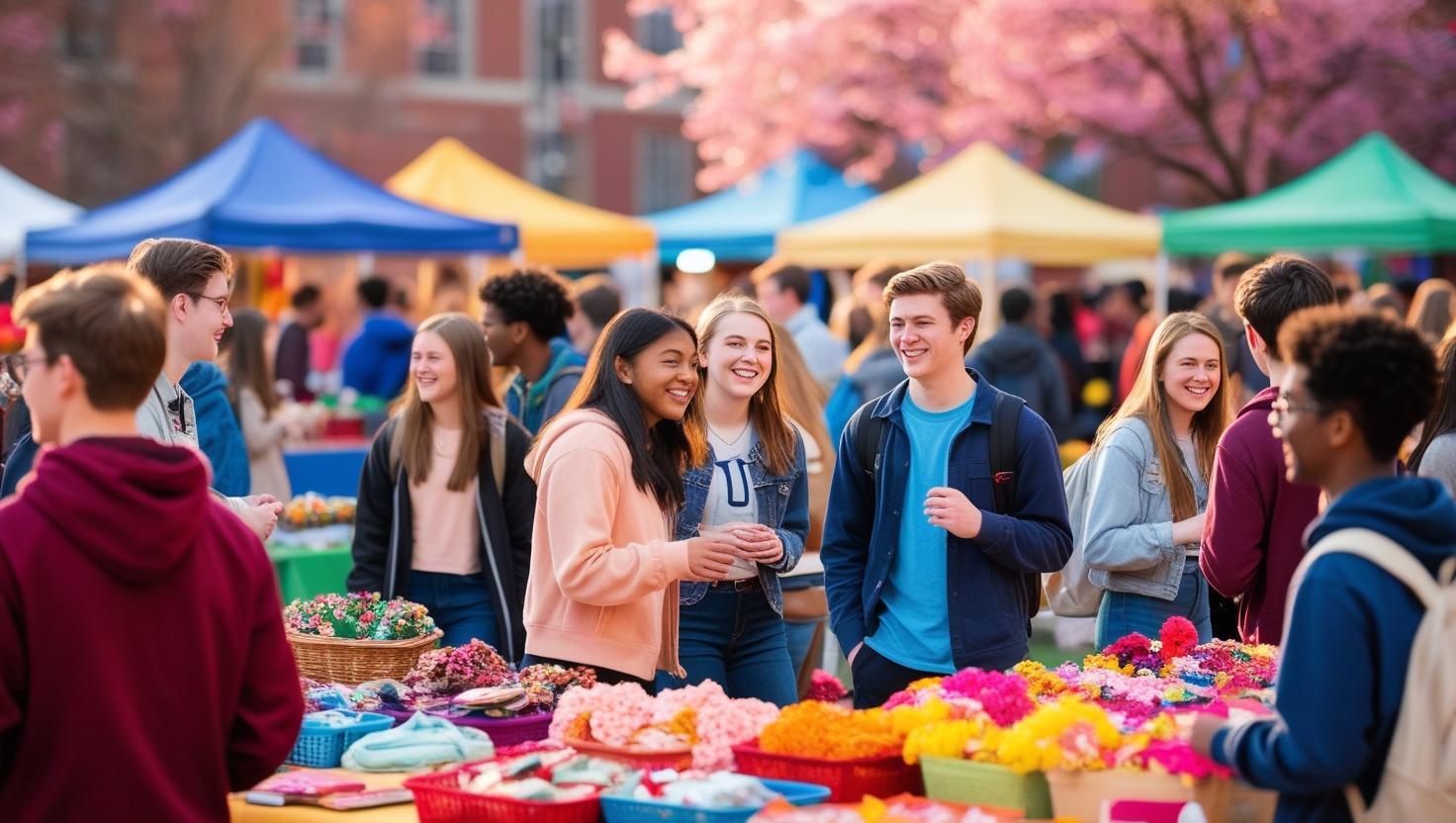
No one really thought we could pull off a full-blown spring bazaar in just three weeks. No one, that is, except our tiny, caffeine-fueled, half-skeptical fundraising team. But we were on a mission—one driven by tight club budgets, underfunded initiatives, and the dream of leaving a mark before the semester ended. What we discovered along the way weren’t just tips or tricks—they were real spring bazaar fundraising secrets that transformed a chaotic college project into something unforgettable.
The first secret hit us unexpectedly: it’s not the number of booths that brings the crowd—it’s the buzz. We thought more booths meant more variety, more revenue, more engagement. But what actually ignited the campus was the storytelling behind the booths. Every vendor had a story, and those stories—told through Instagram teasers, sidewalk chalk art, and even a rogue TikTok challenge—created anticipation that no flyer could match. The girl selling crochet frogs wasn’t just another hobbyist; she was the biochem major who crochets to decompress from pre-med stress. The buzz built itself from there.
And then there was the vibe. You can’t fake a spring vibe, but you can absolutely curate one. We ditched the stale gymnasium setup and brought it outside under string lights and student-made banners that flapped in the breeze. A local jazz trio—also students, hustling for exposure—offered live sets in exchange for sandwich vouchers and applause. The quad turned into a scene. It was casual, colorful, chaotic—but magnetic. Students who had no idea what we were fundraising for stopped by just to be part of it.
What no one tells you about fundraising is this: the money comes after the meaning. When we led with “help support our robotics team,” students nodded politely and walked away. But when we flipped the script—when we let the students tell stories about building robots that could navigate disaster zones or help with search-and-rescue—the dollars started flowing. Our team made it personal. We gave potential donors a reason to feel something, to connect, to invest—not just donate.
Another secret? Collaboration wins over competition every time. Instead of each club competing for attention, we unified under a common cause—raising money for student-led innovation. This umbrella theme made it easier for the college to support us, for academic advisors to back us, and for departments to allow cross-promotion. Even rival clubs joined forces, sharing booth space, marketing plans, and late-night supply runs. Something shifted in that moment—we weren’t just planning a bazaar. We were building community.
But oh, the drama. The kind that only arises when you’re juggling vendor permits, late booth cancellations, and a budget that disappears faster than free pizza. One night we lost power to the entire quad. Our string lights and charging stations died with it. But instead of panicking, a group of design students created paper lanterns on the fly with nothing but battery-powered fairy lights and recycled plastic. That moment—glow-lit faces, impromptu acoustic music, a soft rustle of wind—was when I realized: magic happens when control slips away.
Academic advisors began noticing too. Not just the financial success of the bazaar, but the leadership, the creative problem-solving, the cross-departmental collaboration. Our event had become more than a fundraiser—it had turned into a living résumé for every student involved. The communications major who ran our social media campaign ended up landing a paid internship before the semester ended. The accounting student who handled our vendor logistics was invited to speak at a regional business conference. The impact extended far beyond our goals.
And let’s talk impact. In one day, we raised enough to fund three major student projects, purchase supplies for a community outreach initiative, and launch a new mental health art series on campus. But more than that, we raised something intangible—momentum. Hope. A sense of ownership over our college experience. That, perhaps, is the greatest secret of all.
We didn’t start with perfect plans. We didn’t have a professional team. What we had was passion, a whiteboard full of chaos, a playlist titled “Fundraiser Fire,” and the stubborn belief that we could make it happen. We trusted our voices, our stories, our messy, beautiful creativity.
So if you’re a college student thinking of launching your own bazaar, or an academic advisor wondering how to support these efforts, know this: the best bazaars aren’t the ones that look like Pinterest boards. They’re the ones that pulse with student energy. That lean into the imperfections. That make space for joy, and noise, and meaning.
Because when a group of students decides to take fundraising into their own hands—not just to raise money, but to raise possibility—that’s when the real magic happens.
And if you’re still wondering where to start?
Right here. With your own story. And a vision worth funding.
Disclosure: As an Amazon Associate, I earn from qualifying purchases. Thanks for supporting this blog and helping me stay caffeinated in the post-grad world.



Leave a Reply