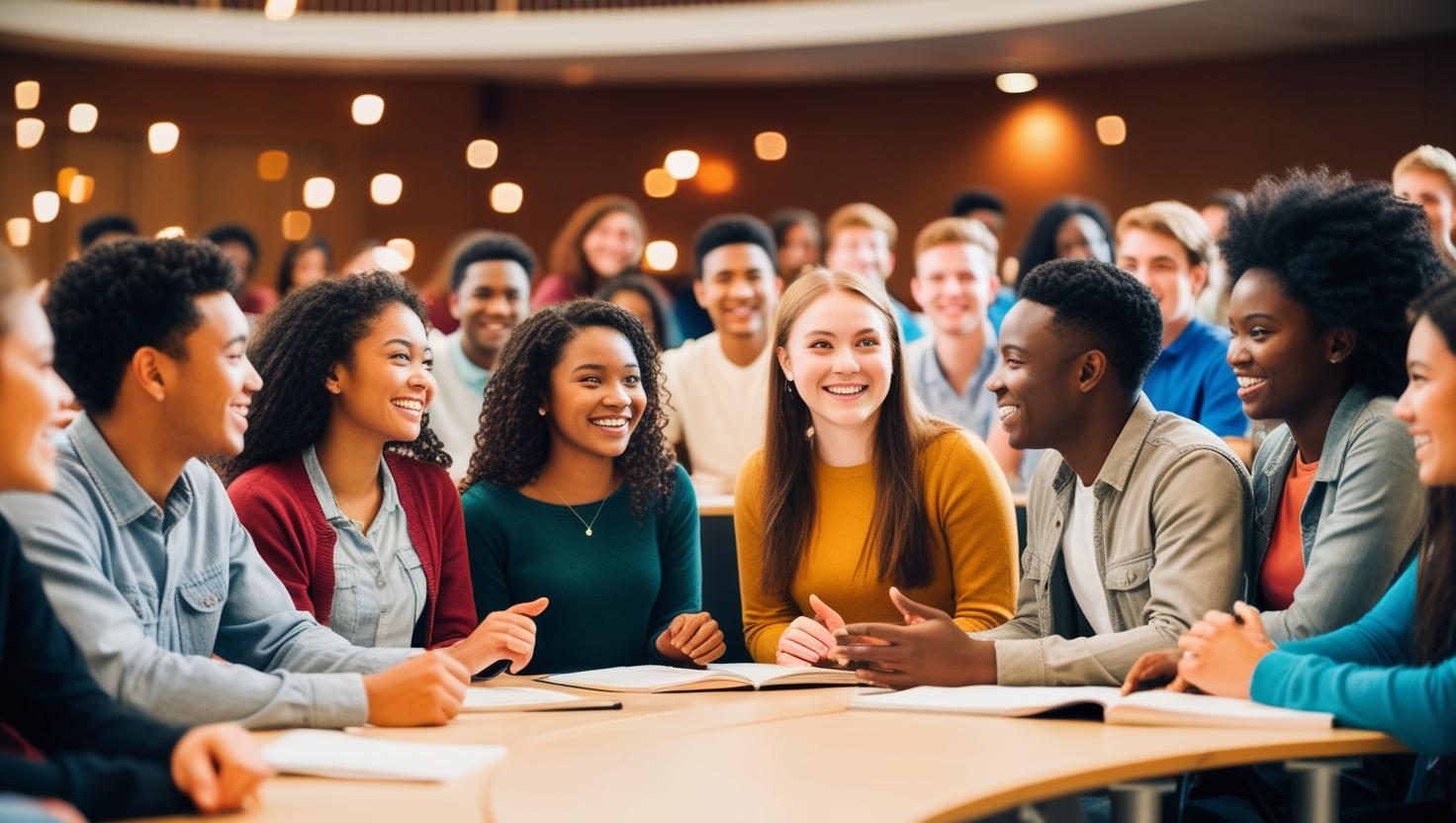
There’s something quietly electric about the first day of college classes. New notebooks, ambitious syllabi, coffee cups clenched like lifelines. But what hit me the hardest wasn’t the academic load—it was the voices. Different accents, expressions, laughter in unfamiliar rhythms. I never expected that I would meet the world in my lecture hall, but there it was—right in front of me. That was the moment I realized: college is the new United Nations.
I had always imagined meeting students from other countries someday, maybe during a study abroad program or while traveling. I didn’t expect it to happen in my 9:00 a.m. Political Science class. But there they were—classmates from Brazil, Nigeria, Germany, Japan, and Turkey, all casually discussing world economies over breakfast burritos and laptop chargers. I was sitting in a global summit disguised as a campus classroom. That’s the magic of today’s higher education. You don’t need to travel across oceans to meet the world. You just need to walk into a lecture hall.
What struck me even more deeply was how this international energy blended with the presence of non-traditional students. Just a few weeks earlier, I had written about them in “Non-Traditional Students Rising: A Powerful Tale of Determination and Success“—students who may be older, raising kids, working full-time, or returning to school after a life detour. And now, in this same classroom, I saw both kinds of diversity meeting face to face: generational and global. It felt like watching resilience and perspective shake hands.
I remember a moment during a discussion about global health policy. A student from Kenya raised her hand to share insights from her community’s experience with public health programs. Right after, a military veteran in his late 30s—clearly a non-traditional student—added how he’d seen international aid efforts firsthand during his service. Two wildly different life journeys, one shared classroom. That moment was more educational than any slide in the PowerPoint.
At first, I felt hesitant. What if I mispronounced a name? What if I asked something that sounded ignorant? What if we just didn’t click? But curiosity nudged anxiety out of the way. I asked one international classmate about their hometown, and the conversation turned into a lunch invite. That invite turned into a weekend cultural event. And that event blossomed into friendships I couldn’t have imagined a semester earlier.
These friendships didn’t form because we ignored our differences. They happened because we leaned into them. What’s surprising isn’t just how diverse campus life is becoming, but how naturally these bonds grow. You start by borrowing a pen or sharing notes and end up learning about Ramadan traditions, Lunar New Year stories, or how elections work in South Africa. You realize your worldview has been just that—yours. Suddenly, you’re seeing politics, relationships, humor, even fashion, through a more colorful, complex lens.
One group project I’ll never forget brought us all together—a team of five with passports from four continents and one commuter student juggling work and classes. Where I approached our research with a structured outline, my teammate from Colombia brought unexpected energy and visuals that stole the show. Our classmate from India had tech insights none of us had even thought of. And our non-traditional teammate, the one balancing family and coursework? She grounded us. Her time management was flawless, her perspective was mature, and her empathy was unmatched. We didn’t just finish the project—we bonded, we laughed, we supported each other through finals.
That kind of collaboration teaches you more than what’s in the syllabus. It teaches you empathy. When a friend from Ukraine struggles to focus because of the news back home, or a classmate fasts during daylight hours and still shows up energized for your group meeting, you gain a new level of respect. And when a single dad in your night class nails a presentation after leaving work early to attend, you’re reminded that determination speaks every language.
Professors talk about “cultural competence” and “global awareness,” but until you actually live it, those terms feel abstract. Sitting beside someone who grew up in a refugee camp, or who worked in tech before switching careers to social work, or who came from a small village on another continent to chase their academic dream—that’s when global awareness gets personal.
Some of my most powerful college memories aren’t from parties or football games. They’re from quiet, shared moments—helping an international classmate shop for winter clothes, learning to eat with chopsticks from a dormmate who grew up in Taiwan, staying up late with an older student who taught me how to write a better cover letter. These weren’t random acts of kindness. They were cross-cultural exchanges that shaped my identity.
And it’s not just the social stuff. Even coursework is shifting. Business classes talk about startups in Kenya. Literature professors assign Nigerian authors. In biology labs, students discuss climate challenges in their home countries. Whether you know it or not, you’re building a global lens—one that might guide your career, your relationships, and even your values long after graduation.
Yes, there are awkward moments. Misunderstandings happen. But more often than not, those moments lead to humor and growth. I’ve stumbled over greetings, confused idioms, and struggled to understand accents. But every fumble turned into a story—and a connection.
What I’ve come to love most is that being around such diversity reminds you how big—and small—the world is. We’re shaped by our cultures, yes. But we also share the same late-night stress before exams, the same excitement over passing grades, the same homesickness, the same goofy memes. It’s unifying in the most unexpected ways.
Meeting the world in your lecture hall isn’t just a perk of modern college life. It’s a privilege. It’s a chance to challenge your assumptions, stretch your thinking, and grow into a more compassionate human. You can’t stay the same when your friends come from five continents and three decades of life experience. And honestly? You wouldn’t want to.
So don’t sit quietly in the back row. Start a conversation. Ask someone where they’re from. Ask someone why they came back. Whether they’re from Syria or your own zip code, chances are, they’ve got a story to tell. College gives you a front-row seat to the world. Don’t waste it staring at your phone.
Because here’s the thing: the people you meet now might shape your future in ways you can’t even predict. They might be your future co-founders, your wedding guests, your mentors. Or they might simply become the people who remind you that the world is wide—and so are you.
Go ahead, meet the world in your lecture hall.
It’s the one lecture you’ll never forget.
Disclosure: As an Amazon Associate, I earn from qualifying purchases. Thanks for supporting this blog and helping me stay caffeinated in the post-grad world.


Leave a Reply