

The college is not always about smooth-sailing courses or easygoing professors. Sometimes you will meet educators who challenge your patience and stress levels as much as they challenge your knowledge. Difficult professors are almost a rite of passage in college, and navigating their complexities can be one of the most frustrating -but also rewarding- parts of your academic journey.
Mastering Difficult Professors is more than just getting through class with a passing grade. It is about developing the skills to thrive in less-than-ideal environments and building resilience that will benefit you beyond the classroom. Whether your professor is disorganized, overly demanding, or simply hard to read, there are strategies that can help you excel -and even come out stronger.
Recognizing the Types of Difficult Professors
One of the first steps in surviving with difficult professors is understanding their distinct styles. Every professor comes with a set of traits that can either overwhelm you or, if you know how to approach them, help you develop important life skills. Professors generally fall into a few key types, each with its challenges and opportunities.
The «Houdini» (Disorganized Professor) This professor often seems as lost as their students. With unclear syllabi and scattered lectures, they create an environment of chaos, leaving students confused about what is important. However, the flexibility of disorganized professors can be a benefit. Since their expectations are often vague, they may allow for more lenient deadlines or open-ended projects. To thrive under this type of professor, the key is to take control of your own organization. Staying on top of assignments and clarifying expectations with the professor early on can turn a chaotic class into a manageable one.


The «Whiplash» (Ultra-Demanding Professor) The ultra-demanding professor treats their class like a boot camp, pushing you to your limits with high expectations and little room for error. Their feedback can be brutal, leaving students feeling overwhelmed. However, the rigor they demand helps you develop strong academic discipline. When you rise to their expectations, the rewards extend far beyond the classroom. You leave the course stronger, more resilient, and better equipped for real-world challenges. The key to thriving here is grit—learning to manage the pressure and push through, knowing the experience will make you more capable in the long run.
The «Snoozer» (Indifferent Professor) Some professors simply don’t seem to care. Whether due to burnout or disinterest, their lectures lack passion and engagement. This can be frustrating, especially for students who thrive in active, dynamic environments. But the indifferent professor’s hands-off approach can be an opportunity for independent learners. Their lack of involvement often gives you the freedom to explore topics at your own pace. If you’re a self-motivated student, you can shine in this type of class by taking control of your learning and going above and beyond the minimum expectations.
The «Supreme Ruler» (Narcissist Professor) Narcissist professors thrive on admiration and expect their students to recognize their intellectual superiority at all times. They are quick to take offense and slow to accept feedback. Working with a narcissist professor can feel like walking on eggshells, but it also offers an opportunity for strategic engagement. If you play to their ego -ensuring that your success reflects positively on them- you might find that they will support your academic growth, as it feeds into their need for validation [1].
The «Puzzle» (Bad Explainer Professor) This professor is brilliant in their field but struggles to convey their knowledge clearly. Their lectures are filled with tangents and overly complex explanations that leave students scratching their heads. Although their teaching style is challenging, office hours can be a lifeline. Engaging with them one-on-one gives you the opportunity to clarify difficult concepts and build a better understanding of the material. The key here is patience—take the time to review the content outside of class and come prepared with questions [2].

The «Chore Lord» (Busywork Assigner Professor) Some professors believe that endless work equals more learning. These taskmasters often overwhelm students with a constant barrage of assignments that feel like busywork. While these classes can be frustrating, they also teach valuable skills in time management and endurance. Overachievers often thrive under this kind of pressure, but for procrastinators, it’s a race to keep up with the workload. The key to surviving a taskmaster professor is organization—create a schedule and stick to it to avoid being buried under a pile of assignments [2].
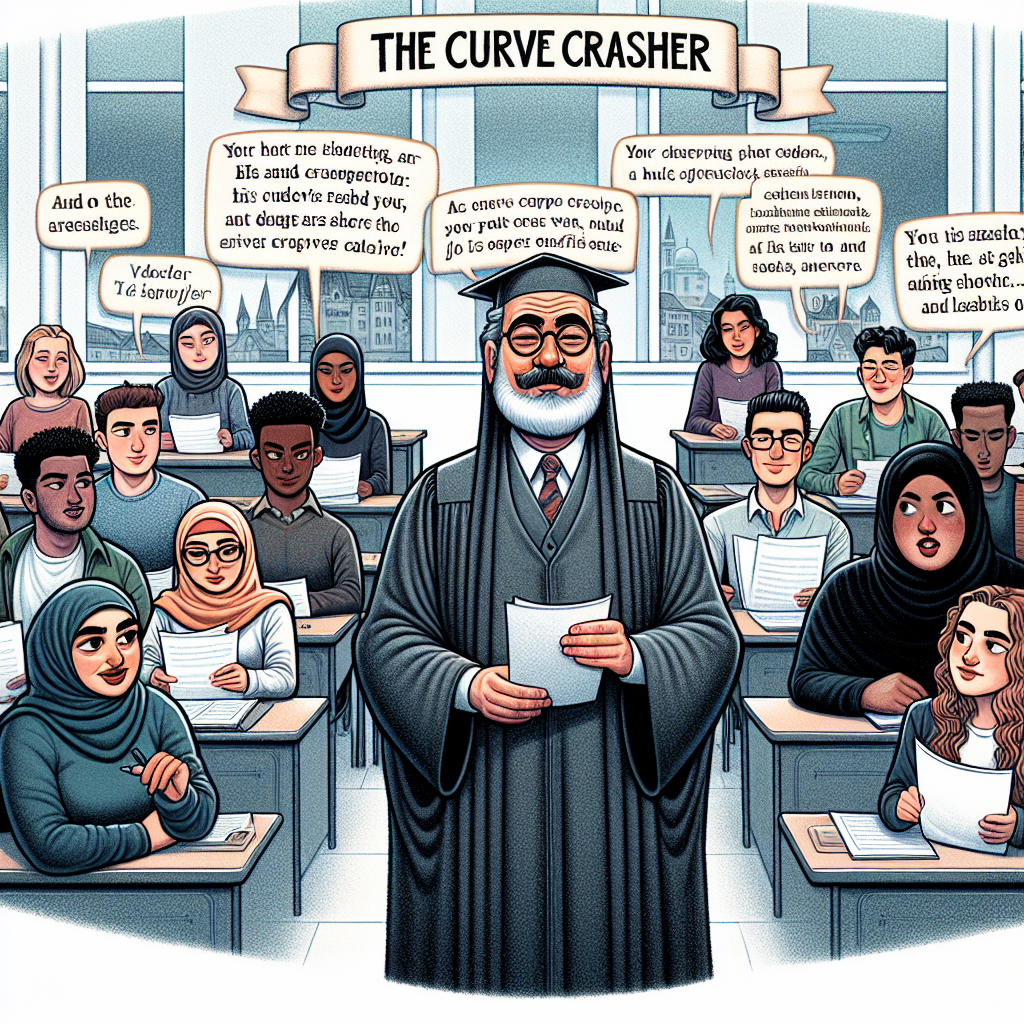
The «Curve Crasher» (Unfair Grader Professor) The Curve Crasher is the professor who leaves you mystified when it comes to your grades. Their feedback is vague, subjective, and often inconsistent. While their grading can be demoralizing, it also pushes students to improve their writing, argumentation, and presentation skills. When faced with a Curve Crasher, it’s crucial to seek clarity—ask specific questions about what they are looking for and how you can improve. Even if they’re tough, this can help you sharpen your skills for future classes [2].
The «Snap (him/her)» (Rude Professor) The Snap (him/her) loves delivering sharp remarks and condescending comments, making students feel undervalued. They may seem unapproachable and dismissive, but the key to dealing with this type of professor is to maintain professionalism and patience. Snarky Sphinxes can be difficult to engage, but by focusing on your work and avoiding confrontation, you can succeed in their class. Social butterflies might try using their charm to lighten the mood, while more reserved students should focus on staying respectful and collected [2].
The «Phantom» (Chronically Absent Professor) This professor is rarely seen in class, leaving students unsure of where they stand academically. Their frequent absences can cause frustration, but it’s essential to stay proactive and seek clarity from academic advisors when necessary. This professor might make you feel like you’re flying blind, but keeping organized and staying in touch with your peers and advisor can help you navigate their unpredictability [3].
The «X-files» (Unclear Professor) The X-files Professor is notorious for giving vague assignments and instructions. You’ll often find yourself asking, «What exactly do they want?» -but don’t be afraid to seek clarification. Asking questions during class and meeting them during office hours can help you decode their expectations. With a bit of patience and proactive communication, you can sail through their murky instructions and reach clarity [3].
The «Dictator» (Rigid Professor) This professor runs their class with an iron fist, offering little flexibility in deadlines or grading policies. They expect every rule to be followed to the letter, which can make students feel like they’re walking on eggshells. But, by understanding their structure and following their guidelines meticulously, you can succeed in their course. If the rigidity feels too overwhelming, connecting with peers or discussing your challenges with the professor can sometimes yield a helpful compromise [3].
Recognizing your own classroom type
Correspondingly, every student brings their unique style to the classroom, and aligning your approach with your professor’s teaching style can make a world of difference. Understanding your own strengths can help you thrive, even in challenging situations.
If you’re the type of student who’s self-motivated, the Houdini (Disorganized Professor) is your perfect match. This professor’s chaotic nature means you’ll need to take control, stay organized, and plan ahead. For a student who likes independence and flexibility, this can be a chance to create your own structure while using their loose deadlines to your advantage.
On the other hand, if you’re driven by perfection and discipline, then you and the Whiplash (Ultra-Demanding Professor) might actually click. These professors thrive on pushing their students to their limits, and if you enjoy high expectations and clear goals, you might excel in their boot camp-like environment. The key is grit -students who are resilient and organized will thrive under their strict demands.


On the other hand, if you’re driven by perfection and discipline, then you and the Whiplash (Ultra-Demanding Professor) might actually click. These professors thrive on pushing their students to their limits, and if you enjoy high expectations and clear goals, you might excel in their boot camp-like environment. The key is grit -students who are resilient and organized will thrive under their strict demands.
Students who value freedom and exploration will find themselves at ease with the Snoozer (Indifferent Professor). This hands-off approach gives you the space to dive deep into topics that interest you. If you’re a Self-Starter who can motivate yourself, this type of professor provides the independence you need to shine. On the other hand, students who thrive on constant feedback and engagement might find this teaching style frustrating.
If you’re a Strategist who’s good at reading people and navigating egos, you’ll likely find a way to thrive with the Supreme Ruler (Narcissist Professor). These professors crave admiration, and if you play to their strengths while focusing on your academic success, you can build a positive relationship that benefits both of you. Success here lies in tactfully balancing admiration with academic performance.
For students who love to solve puzzles and think critically, the Puzzle (Bad Explainer Professor) might be the perfect challenge. Their lectures may lack clarity, but with patience and one-on-one time, you can unlock their brilliance. Students who don’t mind extra effort and appreciate intellectual curiosity will excel, especially if they come prepared with questions and review material thoroughly.
Overachievers and highly organized students often click well with the Chore Lord (Busywork Assigner Professor). These students are naturally equipped to handle the heavy workload with structured study habits and disciplined time management. For those who procrastinate, however, this type of professor can feel overwhelming, making it essential to develop a consistent study plan.
Dealing with the Curve Crasher (Unfair Grader Professor) requires resilience and attention to detail. Students who thrive here are those willing to seek clarity and improve their work through consistent feedback. Patience and adaptability are key as you work to understand their expectations and improve your skills.
The Snap (Rude Professor) thrives on confrontation, but students who maintain professionalism and a calm demeanor can disarm their sharp remarks. Social butterflies may find ways to lighten the mood with humor or charm, while more introverted students can focus on their work and stay respectful, keeping their distance.
The Phantom (Chronically Absent Professor) is best matched with students who can manage themselves independently. Staying organized and proactive, especially by consulting with peers and advisors, can help you navigate their unpredictability. Self-reliant students who are comfortable with ambiguity will fare best.
Students with patience and perseverance are ideal for the X-files (Unclear Professor). Their vague instructions demand proactive communication. Students who aren’t afraid to ask questions and seek clarification will find ways to succeed, turning ambiguity into opportunity.
Finally, the Dictator (Rigid Professor) connects well with students who are meticulous, detail-oriented, and appreciate a clear structure. These professors value precision, so if you’re a rule-follower and thrive on predictability, you’ll do well. Those who feel stifled by rigidity may need to communicate openly or find creative ways to navigate the strict guidelines.
Ultimately, knowing your own learning style and aligning it with your professor’s teaching approach can transform a challenging class into a rewarding experience. By adapting to their expectations and recognizing the dynamics at play, you’ll not only survive but thrive in any academic environment.
Shifting Your Mindset: From Survival to Growth
Dealing with a difficult professor often starts with your mindset. Approaching the situation with a negative outlook -assuming that you’ll fail or never understand the material- can trap you in a cycle of frustration. Instead, try shifting your perspective. You can view this as a learning experience, not just about the subject matter but about working with challenging individuals. Treat each class session as a chance to practice patience, resilience, and problem-solving.
As noted in a blog on Inside Higher Ed [4], seeing a tough professor as a puzzle to solve can make the class feel like an intellectual challenge, not a personal battle. It’s not about surviving despite the professor but thriving because you’ve learned how to adapt to their teaching style.


Effective Communication is Key
One of the most underutilized tools in a student’s arsenal is communication. Students are often intimidated by professors who seem harsh or unapproachable, but clear and respectful communication can be a game-changer. If you’re struggling, make an effort to meet with your professor during office hours. Express your concerns in a way that shows you’re genuinely interested in learning. Avoid making it sound like you’re blaming them or accusing them of making the class too difficult. Instead, frame your questions constructively, asking for clarification on specific points or requesting advice on how to succeed in the class.
In one example from Quora [5], students who approached professors with humility and a genuine desire to improve often found that their instructors were more willing to provide guidance and even tailor feedback. Even the toughest professors respect students who take ownership of their learning process.
Find Support in Your Peers
You’re likely not the only one struggling in the class. In fact, many of your classmates might be feeling the same frustrations. Forming study groups or discussion circles can be a great way to manage the workload together. Sharing notes, reviewing lecture content, and discussing confusing topics with your peers can help you gain new perspectives and insights.
In classes where professors are less forthcoming with answers, your peers can serve as an additional support system. Learning together not only strengthens your understanding of the material but also provides emotional support. Surviving difficult professors is a lot easier when you know you’re not alone in the struggle.


Adapting to Different Teaching Styles
One of the most important skills you can develop in college is learning how to adapt to different teaching styles. Each professor brings a unique approach to the classroom, and it’s unlikely that every style will perfectly align with your learning preferences. Instead of expecting your professors to change, it’s often more effective to adjust your own strategies to meet their teaching methods.
If a professor is particularly disorganized, take the initiative to stay organized. Use a planner or digital tools to keep track of deadlines, assignments, and lecture topics. By taking control of your own schedule, you can compensate for any lack of structure in the classroom. Additionally, if lectures are unclear or unstructured, consider supplementing with external resources, such as textbooks, online videos, or academic articles that cover the same material. Often, understanding a difficult subject requires hearing it explained in different ways.
For professors who overwhelm you with busywork or seem to assign repetitive tasks, it’s important to remain disciplined. While these assignments may feel like a waste of time, they can be an opportunity to practice time management and perseverance. Break the workload down into manageable pieces and tackle them in small chunks. This will not only prevent burnout but also help you stay on top of the class.
In situations where a professor has rigid expectations or is ultra-demanding, it’s essential to stay organized and prepare ahead of time. These professors respect students who take their classes seriously, so showing that you’re proactive and on top of things can help you stand out. Ask for clarification early if expectations are unclear and approach each assignment with precision to avoid any miscommunication. Adaptability is one of the most valuable skills you can cultivate during your academic career. In the workplace, you’ll encounter different leadership styles, expectations, and work environments. Learning to navigate the varied teaching methods of your professors is great practice for handling real-world challenges with grace and confidence.
Stay One Step Ahead
Dealing with unpredictable professors can be especially stressful, but staying one step ahead can alleviate much of that anxiety. By preparing in advance, you put yourself in a position to handle any surprises or sudden changes that come your way.
Start assignments early, even if your professor is known for making last-minute changes or adding unexpected requirements. By giving yourself extra time, you’ll be able to adjust and respond to any new information without the added pressure of a tight deadline. Reviewing lecture notes regularly can also keep you on track. Often, professors who are unclear in their lectures may test on small details you might otherwise overlook. Staying on top of the material week by week will help you avoid the need to cram at the last minute.
Another important aspect of staying ahead is preparing for office hours. Whether you have questions or simply want to clarify expectations, going into these meetings with prepared notes or specific concerns will show your professor that you’re engaged and taking the class seriously. Proactivity not only sets you apart but can also help to build a positive relationship with even the most challenging professors.
Maintaining balance in your life is equally essential. While it’s important to stay ahead academically, don’t neglect your mental and physical well-being. Overworking yourself can lead to burnout, which will only make it harder to keep up. Make time for breaks, hobbies, and social activities to refresh your mind. A healthy balance of work and relaxation will keep you energized and ready to tackle the challenges ahead.
Know When to Seek Help
Sometimes, despite your best efforts, a professor’s teaching style may still leave you struggling to keep up. In these cases, it’s important to remember that there are plenty of resources available to help you succeed.
Most colleges offer academic support centers, tutoring services, and writing labs. These resources are designed to help you fill in the gaps that might not be covered during lectures. Don’t be afraid to take advantage of them. Peer tutoring programs are also incredibly helpful, as they often involve students who have already taken the same class and understand both the material and the professor’s expectations.
If a professor’s teaching style is truly hindering your academic performance or creating undue stress, consider speaking with an academic advisor or department head. While it’s rare for formal intervention to be necessary, your academic well-being should always come first. These advisors can offer guidance on how to manage difficult professors or suggest alternative courses that might better suit your learning style.
In particularly challenging situations -such as dealing with a narcissistic or unfair professor-having another mentor to turn to can be a lifeline. They may help you strategize on how to handle the difficult professor, clarify confusing material, or even advocate on your behalf if necessary. A good mentor will provide guidance, emotional support, and the assurance that you’re not alone in your struggles.
Building a strong network of mentors will not only help you succeed academically but also set you up for long-term success. Mentorship relationships are incredibly valuable, and they often extend beyond college into your future career.
In some cases, it might even be possible to switch sections or negotiate alternative assignments if a professor’s methods are creating significant challenges for you. The key is to advocate for yourself and seek help when necessary.
The Big Picture: Resilience and Growth
You’re likely not the only one struggling in the class. In fact, many of your classmates might be feeling the same frustrations. Forming study groups or discussion circles can be a great way to manage the workload together. Sharing notes, reviewing lecture content, and discussing confusing topics with your peers can help you gain new perspectives and insights.
In classes where professors are less forthcoming with answers, your peers can serve as an additional support system. Learning together not only strengthens your understanding of the material but also provides emotional support. Surviving difficult professors is a lot easier when you know you’re not alone in the struggle.

Professor-Student Combinations: Finding the Right Fit
One of the most important skills you can develop in college is learning how to adapt to different teaching styles. Each professor brings a unique approach to the classroom, and it’s unlikely that every style will perfectly align with your learning preferences. Instead of expecting your professors to change, it’s often more effective to adjust your own strategies to meet their teaching methods.
If a professor is particularly disorganized, take the initiative to stay organized. Use a planner or digital tools to keep track of deadlines, assignments, and lecture topics. By taking control of your own schedule, you can compensate for any lack of structure in the classroom. Additionally, if lectures are unclear or unstructured, consider supplementing with external resources, such as textbooks, online videos, or academic articles that cover the same material. Often, understanding a difficult subject requires hearing it explained in different ways.
For professors who overwhelm you with busywork or seem to assign repetitive tasks, it’s important to remain disciplined. While these assignments may feel like a waste of time, they can be an opportunity to practice time management and perseverance. Break the workload down into manageable pieces and tackle them in small chunks. This will not only prevent burnout but also help you stay on top of the class.
In situations where a professor has rigid expectations or is ultra-demanding, it’s essential to stay organized and prepare ahead of time. These professors respect students who take their classes seriously, so showing that you’re proactive and on top of things can help you stand out. Ask for clarification early if expectations are unclear and approach each assignment with precision to avoid any miscommunication. Adaptability is one of the most valuable skills you can cultivate during your academic career. In the workplace, you’ll encounter different leadership styles, expectations, and work environments. Learning to navigate the varied teaching methods of your professors is great practice for handling real-world challenges with grace and confidence.
Ultimately, successful professor-student combinations are about balance. Students who understand their own learning style and anticipate challenges with certain teaching styles can better strategize for success. While it’s ideal to find the perfect match, sometimes adapting to less-than-ideal pairings helps students develop resilience, flexibility, and self-awareness -qualities that will serve them long after graduation.
As I reflect on my journey with my professor, I realize that while our relationship isn’t perfect, it works because it’s the right combination. Whether by luck, or perhaps because he chose me, something just clicked. We’ve managed to navigate the ups and downs together, and while our paths will eventually part, we’ll always remember our thesis. In a funny twist of fate, it’s like the academic version of «We’ll always have Paris.» Through the challenges, we’ve built a lasting, meaningful connection that will stick with us.
In conclusion, there’s no such thing as a perfect professor, just as there’s no such thing as a perfect student. Every professor and every student brings unique strengths and challenges to the classroom. Choosing professors who align with your needs, or learning how to adapt to those who don’t, is crucial for both your mental well-being and your academic success. In challenging situations, always remember to approach the experience with kindness and respect -both for yourself and for your professors. These qualities will carry you through the toughest moments and leave you stronger on the other side.
Everything above applies reasonably well to undergraduate professors. The course ends in twelve weeks. The grade is finite. You adapt, survive, move on.
Graduate supervisors are a different structure entirely.
The Phantom who disappears for weeks is not just frustrating. They are the reason you make methodology decisions alone that you will later defend in a viva. The Dictator who runs the lab with rigid expectations is not just stressful. They are the one who decided which research question was worth pursuing, and whether that decision served your study or their grant. The supervisor whose feedback changes direction every meeting is not unclear. They are the reason your methodology chapter has eleven drafts and no settled argument.
The strategies that worked in college do not map onto a three-year research relationship where the consequences include your degree, your viva and your first publications. What changes is not the type of person you are dealing with. What changes is what they can cost you.
If you are in a postgraduate programme and something about your methodology decisions feels unresolved (not the relationship itself, but what it has produced in your research) the Research Strategy Audit is a written methodology diagnostic that tells you exactly where your study stands and what needs to change before someone in an examination room tells you first.
References
- Genevieve. Managing a Narcissistic PI: How to maintain your sanity and career [Internet]. Thesis Editing – Enago. Enago Thesis Editing; 2023 [cited 2024 Oct 7]. Available from: https://www.enago.com/thesis-editing/blog/managing-a-narcissistic-pi
- Heath S. The 4 Worst Professors You’ll Have in College (& How to Handle Them) [Internet]. Her Campus. 2020 [cited 2024 Oct 7]. Available from: https://www.hercampus.com/life/4-worst-professors-you-ll-have-college-how-handle-them/
- Yanez J. 3 Challenging Professor Types and How to Work With Them [Internet]. Linkedin.com. 2024 [cited 2024 Oct 7]. Available from: https://www.linkedin.com/pulse/3-challenging-professor-types-how-work-them-jorge-yanez-cpa
- Dunn E. The Lesson of the Difficult Professor [Internet]. Inside Higher Ed | Higher Education News, Events and Jobs. 2019 [cited 2024 Oct 7]. Available from: https://www.insidehighered.com/blogs/gradhacker/lesson-difficult-professor
- Why are college professors, who teach the most complex subjects, often some of the worst teachers? [Internet]. Quora. 2019 [cited 2024 Oct 7]. Available from: https://www.quora.com/Why-are-college-professors-who-teach-the-most-complex-subjects-often-some-of-the-worst-teachers



Leave a Reply