
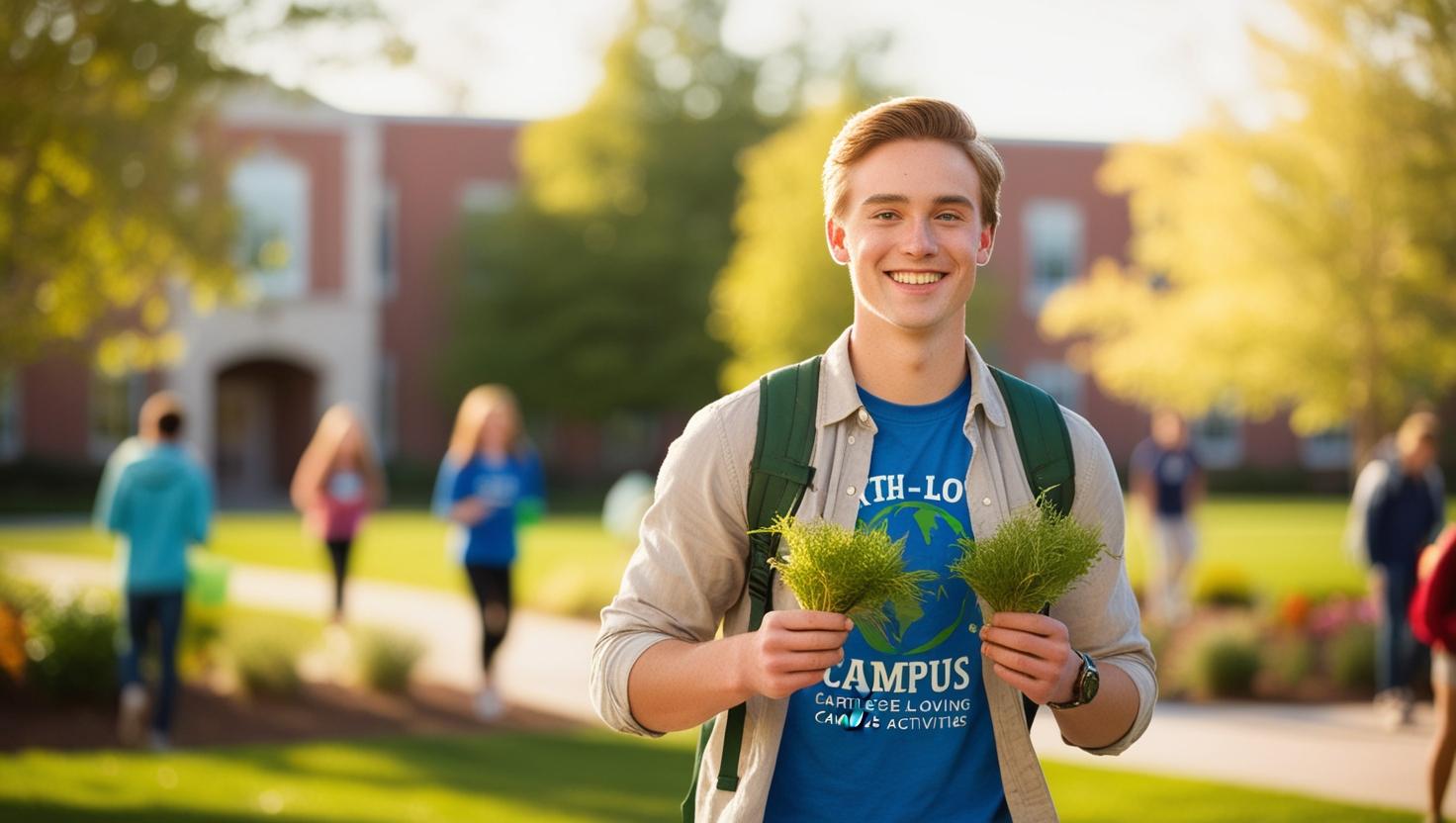
There’s a shift happening across college campuses — one that hums beneath the buzz of group projects, coffee-fueled study sessions, and late-night pizza runs. It’s quiet but powerful, stylish yet meaningful. And it’s wrapped in the kind of energy that could only be generated by students who are done waiting for the world to catch up. Eco is the new extra, and campus events are suddenly the hottest stage for sustainability’s grand entrance.
No longer are green initiatives tucked into the margins of flyers or awkwardly squeezed between bake sales and job fairs. Now, they’re headlining the main stage, stealing spotlights and rewriting what it means to be a student who shows up — not just for class, but for the planet.
At some colleges, it starts with an upcycled fashion show that packs out the student union. Somewhere else, it’s a plant-based street food fest that turns into a block party before sunset. At a liberal arts school nestled in the hills, it’s a solar-powered DJ booth spinning vinyl on a lawn dotted with hammocks and pop-up hammam experiences. What was once an Earth Day obligation has now become something more — something vibrant, weird, memorable, and even Instagram-worthy.
The idea is simple: if sustainability is going to survive the student attention span, it has to feel like something worth showing up for. Students are done with the performative “green talk.” They’re craving action with aesthetics. Change with personality. Events that aren’t just informative, but unforgettable. This is where college programming teams and sustainability committees are stepping up their game in unexpected, jaw-dropping ways.
You walk into a climate carnival on campus and you don’t see guilt-tripping posters or charts about melting ice caps. You see art installations built entirely from dorm trash, glowing under LED lights. There’s a smoothie stand where you pedal a stationary bike to blend your own drink. There’s an eco-poetry slam happening in a teepee made from recycled theater props, and a thrift swap under fairy lights that feels more like Coachella than a swap meet.
The genius of it all is that these events don’t preach. They vibe. They invite. They make climate action cool — not by dressing it up, but by letting it take center stage in a way that feels real. Students aren’t asked to change everything overnight. They’re just given a reason to care — and a space to do something about it, without the pressure of perfection.
For academic advisors, this is a golden opportunity. These campus events aren’t just feel-good fluff. They’re learning environments in disguise. They build community. They foster student leadership. They intersect with majors from environmental science to marketing, sociology to performance studies. Eco-themed programming gives students hands-on experience in everything from event planning and design thinking to civic engagement and behavioral economics.
It’s also deeply inclusive. Students who might not normally connect with environmental activism — because it feels too niche, too heavy, or too technical — find themselves drawn in through food, music, art, and humor. The entry point is low-pressure, but the impact lingers. One sustainability officer joked that their most successful event didn’t even mention the word “sustainability” until halfway through. It was just fun — and smart, and inviting, and so obviously powered by purpose.
Let’s talk vibes. Because let’s be real — if it’s not fun, students are ghosting. The campus green scene today understands this. That’s why events are leaning into sensory experiences. Think DIY bath bomb labs with zero-waste packaging. Glow-in-the-dark scavenger hunts where every clue teaches you about your school’s energy use. Popup composting stations that double as TikTok sets. “Eco is the new extra” isn’t just a phrase — it’s a whole aesthetic.
Students are turning up in thrifted fits with vintage sunglasses, carrying reusable water bottles bedazzled with stickers about loving Mother Earth and the Jonas Brothers. They’re curating playlists with lo-fi beats and rainforest sounds. They’re making sustainability a lifestyle, not a lecture.
And it doesn’t end when the event does. These experiences spark campus movements. They inspire clubs. They lead to student-led audits of cafeteria waste, or petitions for more bike lanes. One killer event becomes the catalyst for a dozen more ideas. The momentum is contagious — and it’s beautiful to watch.
The best part? These events are incredibly adaptable. You don’t need a giant budget to make an impact. Some of the most jaw-dropping events were born from shoestring resources and wild creativity. One campus hosted a “Laundry Day Art Show” featuring clothing hung on clotheslines with tags explaining the environmental impact of fast fashion. Another had a “Power Down Pajama Party” where students pledged to unplug for the night and came in candle-lit pajamas to swap bedtime stories and herbal tea recipes. Who knew saving the planet could be so… cozy?
This isn’t a phase. It’s a pivot. Students are reimagining what “green” looks like — and it’s more alive than ever. Advisors, clubs, and faculty have a front-row seat to support and amplify it. The more we co-create spaces that let students lead with vision and vibe, the more unstoppable this movement becomes.
So next time your campus calendar looks a little stale, remember: eco is the new extra. And if you’re planning an event that’s bold, sustainable, and just the right kind of weird, chances are it’s going to be unforgettable — and exactly what students didn’t know they needed.
Disclosure: As an Amazon Associate, I earn from qualifying purchases. Thanks for supporting this blog and helping me stay caffeinated in the post-grad world.



Leave a Reply