

The landscape of academic preparation is undergoing a seismic shift, and at its heart lies an Artificial Intelligence (AI) study organization system that changes how students approach the finals week. As we navigate through the 2024 academic year, artificial intelligence is not just a buzzword; it is becoming the silent study partner that top-performing students cannot imagine living without.
Think back to your last finals week. The scattered notes, the late-night cramming, and the constant feeling that you are forgetting something crucial. Now, imagine having a personal academic assistant that not only organizes your study materials, but also adapts to your learning style and schedule. This is not a scene from a science fiction movie; it is the reality of studying in 2024, and it is transforming how students prepare for their most challenging academic moments.
The Evolution of Study Organization
Remember when having a color-coded planner was considered peak organization? Today’s students are leveraging sophisticated AI tools that make these traditional methods outdated as a dial-up internet. The integration of artificial intelligence into study routines is not just about working harder; it is about working smarter, with technology that understands and adapts to individual learning patterns.
Research from recent educational studies shows that AI-powered learning tools fundamentally transform how students approach their studies, with significant improvements in both their understanding and academic performance [1]. This is not just about working harder; it is about leveraging technology that understands and adapts to individual learning patterns.

Breaking Down the AI Study Revolution
The landscape of higher education is experiencing profound transformation through AI integration, particularly in how students prepare for and approach their exams [2]. What makes these systems so effective is not just their technological sophistication; it is their ability to create a personalized learning ecosystem that evolves with each study session.
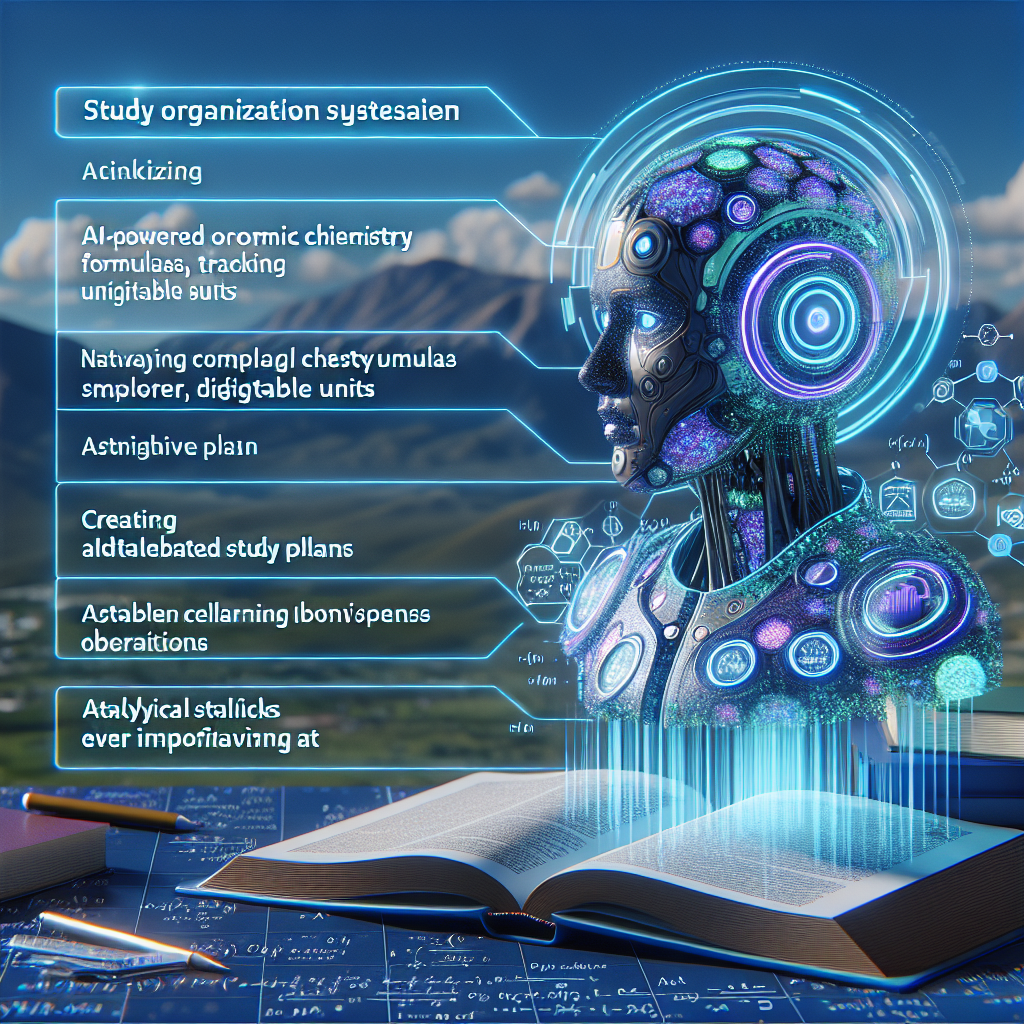
At its core, an AI-powered study organization system works as a highly intelligent personal assistant. It analyzes course materials, tracks progress, and creates customized study plans that adapt to performance. However, unlike traditional study methods, this system learns from interactions and becomes more effective over time.
Magic occurs when AI algorithms begin to recognize patterns in their learning behavior. Strugging with organic chemistry formulae, the system might suggest breaking them down into smaller, more digestible chunks, and increasing the frequency of practical problems in that area. Acing for your literature analysis, this might accelerate your review schedule and challenge you with complex analytical tasks.
The Core Components
Recent studies have identified four key factors that make AI-enhanced learning environments particularly effective: academic self-efficacy, autonomy in resource utilization, sustained interest and engagement, and improved self-regulation and goal-setting [3]. These elements worked together to create a comprehensive and effective study experience.
In addition, your AI study partner starts by analyzing and categorizing your course materials: lecture notes, textbook chapters, past exams, and even your own study notes. It creates connections between related concepts and builds a web of knowledge that makes recall more intuitive and effective.
Also, the system creates customized study schedules based on performance and learning patterns. If you are consistently struggling with certain concepts, it automatically allocates more time to these areas. If you are excelling in others, it adjusts to maintain a challenge without overwhelming you. Lastly, modern AI systems provide detailed analytics about progress, identify knowledge gaps, and suggest targeted reviews where needed.

The Human Element in AI-Powered Learning
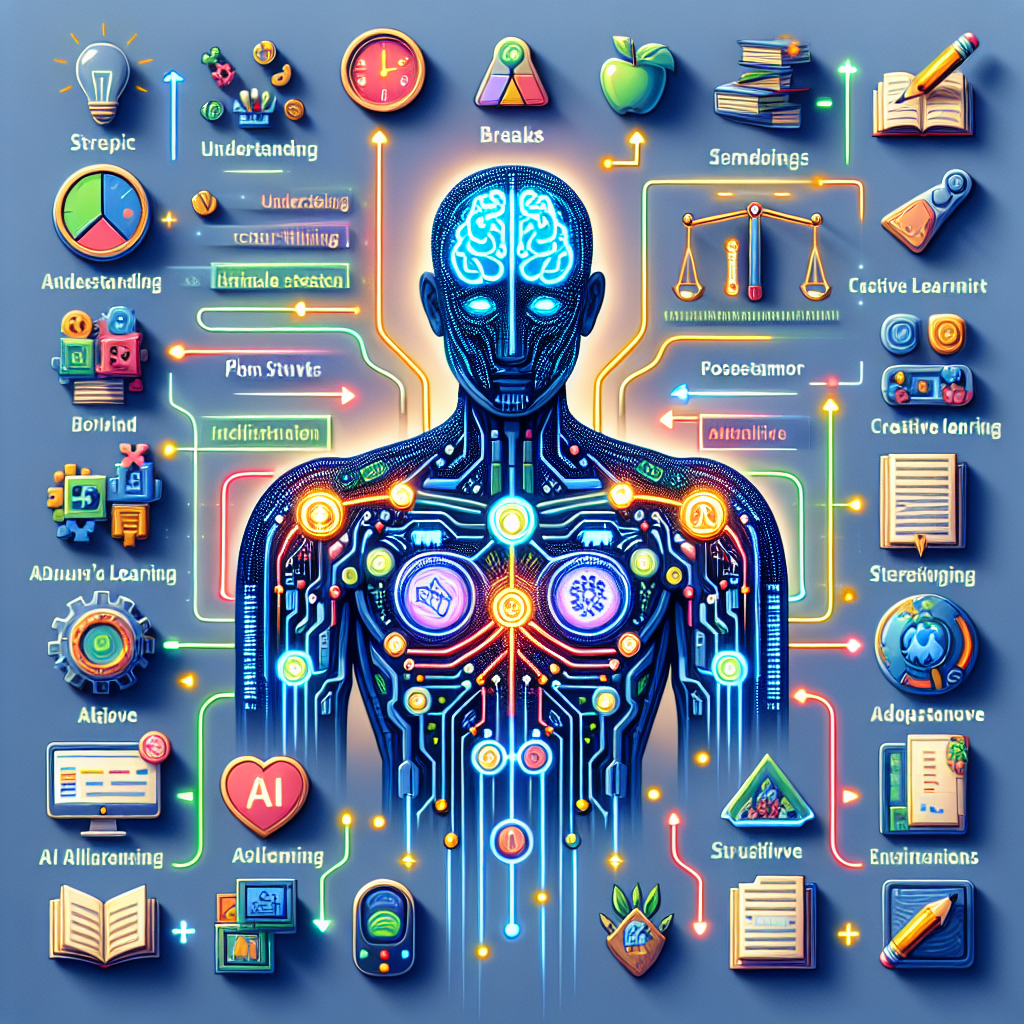
Despite its technological sophistication, the most successful AI study system recognizes the importance of human elements in learning. They do not just drill facts; they encourage understanding, critical thinking, and creative problem-solving. They also factor in very human needs, such as break times, stress management, and varied learning activities, to maintain engagement and prevent burnout.
In fact, a leading educational technology researcher at Stanford noted that the most effective AI study systems do not replace traditional learning methods; they enhance them. They provide structures while maintaining the flexibility that individual learners require.
The Impact on Academic Performance
The transformation in student achievement through AI-powered study systems is nothing short of being remarkable. Recent research on adaptive learning technologies has shown an unprecedented surge in educational technology adoption, with publications on this topic growing from one in 1990 to 636 in 2023 [4]. This explosive growth reflects the real-world impact of these tools on students’ success.
A compelling study of AI-powered educational tools revealed that students using these systems showed significant improvements in motivation and engagement, particularly in self-directed learning environments [5]. The research emphasized that when AI tools provide immediate, personalized feedback, students experience enhanced confidence and competence in their studies.
What is particularly exciting is how these tools reshape the way students approach their final preparation. Salido’s [1] groundbreaking research demonstrated that AI-powered learning tools not only improve academic performance but also enhance overall comprehension levels. Students reported feeling more confident and better prepared, with the AI systems helping them identify and focus on areas needing improvement while reinforcing their strengths.
Real magic occurs when these tools are strategically combined. According to recent research by Bognár et al. [3], students who effectively integrated multiple AI study tools saw an average GPA increase of 0.4 points compared to those using traditional methods alone. The key is not to use every tool available, but to build your personal “smart study stack” – a combination of AI tools that complement your learning style and academic needs.
For instance, you might use Notion AI as your home base for organization, supplement it with Anki’s AI flashcards for memorization, and use Forest’s AI focus tracking to keep you on the task. This combination creates a powerful ecosystem that supports every aspect of a study routine.
Your New Digital Study Crew
The picture has a personal assistant who organizes all your notes, a tutor who never gets tired, and a time management expert in your pocket. This is what Notion AI brings to the study setup. This powerhouse has become a go-to for students who love clean organizations using artificial intelligence. It is like having Marie Kondo meet AI – everything has its place, and AI helps you find it instantly.
However, the organization is just the beginning. When you are deep in the study mode, Microsoft OneNote with Copilot becomes your intellectual sparring partner. Think of it as having a study buddy who’s read every textbook and can help you make connections that you might have missed. Recent studies have shown that students using AI-enhanced note-taking tools, such as OneNote with Copilot, spend 40% less time organizing their materials and 60% more time on actual learning.
The Memory Masters
Remember the endless stacks of flashcards used to litter your desk. Enter Anki with its AI companion and Quizlet Learn. These tools do not just help you memorize – they help you understand how your memory works. Using sophisticated spaced repetition algorithms, they created personalized review schedules that feel almost magical in their effectiveness.
Your Focus Guardians
Here is a true bomb: even the best study materials will not help if you cannot focus. That is where apps such as Forest and RescueTime AI come in, but with a 2024 twist. These are not just fancy timers; they are AI-powered productivity analysts who learn their peak performance hours and help protect them. Forest gamifies your focus time, whereas its AI analyzes the study patterns to suggest perfect time blocks for different subjects. Meanwhile, RescueTime’s AI works as a personal productivity coach, gently steering you back to your studies when you have fallen into a social media rabbit hole.
The Problem Solvers
For those moments when you are stuck on a particularly tricky math problem or need to polish an essay, there is a new breed of AI assistance. Photomath has evolved beyond simply solving equations; it is now an AI-powered math tutor that explains concepts in ways that match your learning style. On the writing front, Grammarly has transformed from a simple grammar checker to a sophisticated writing assistant that helps craft arguments and structure essays more effectively.
As we move deeper into 2024 and beyond, the integration of AI in academic preparation will only become more sophisticated. We have already observed developments in areas such as augmented reality study aids and AI-powered study groups. The key is to find the right balance between technological assistance and personal engagement with materials.
However, here is where it gets really interesting. Currently, students are not just working harder, but they are also working smarter. They spend about a third of their time studying while maintaining or even improving their performance. That is right – imagine getting back 35% of your study time to catch up on sleep, hit the gym, or actually have a social life during the final week.
Perhaps, this is the most compelling part? Dramatic drop in stress levels. If you have ever experienced midnight panic during the final week, you will appreciate this: students reported a 42% decrease in pre-exam anxiety. Think about it – that’s nearly half the stress gone, replaced with the confidence that comes from knowing you are genuinely prepared.
The cherry on top? This was not only about acing finals. Knowledge is stuck around. Students reported better understanding and retention of their course material into the next semester, suggesting that AI-powered study systems do not just help you pass tests – they help you master your subject matter.
Implementing an AI study organization system does not occur overnight, but the process is simpler than you might think. Start by uploading your course materials and spending time interacting with the system. Like any good assistant, it needs to learn preferences and patterns to provide the most effective support.
For students considering switching to an AI-powered study system, the best time to start is now. The AI-powered study organization system is not just another technology trend; it is a fundamental shift in how we approach academic preparation. As we continue through 2024, these systems will become essential to academic success, as textbooks are to previous generations. The future of study organization is not just about keeping notes in order; it is about creating an intelligent, adaptive system that grows with you throughout your academic journey.
Remember, the goal isn’t to replace traditional study methods entirely but to enhance them with tools that make the process more efficient and effective. As you prepare for your next finals week, consider how an AI-powered study organization system might transform your academic experience. The future of studying is here, and it is smarter than ever.
References
- Salido V. Impact of AI-Powered Learning Tools on Student Understanding and Academic Performance [Internet]. ResearchGate. unknown; 2023. Available from: https://www.researchgate.net/publication/376260972_Impact_of_AI-Powered_Learning_Tools_on_Student_Understanding_and_Academic_Performance
- Singh DRJ. Transforming Higher Education: The Power of Artificial Intelligence. International Journal of Multidisciplinary Research in Arts, Science and Technology [Internet]. 2023 Oct 24;1(3):13–8. Available from: https://ijmrast.com/index.php/ijmrast/article/view/14
- Bognár L, Ágoston G, Bacsa-Bán A, Fauszt T, Gubán G, Joós A, et al. Re-Evaluating Components of Classical Educational Theories in AI-Enhanced Learning: An Empirical Study on Student Engagement. Education Sciences [Internet]. 2024 Sep 3 [cited 2024 Sep 20];14(9):974–4. Available from: https://www.mdpi.com/2227-7102/14/9/974
- Strielkowski W, Grebennikova V, Lisovskiy A, Rakhimova G, Vasileva T. AI-driven adaptive learning for sustainable educational transformation. Sustainable Development. 2024 Oct 3;
- Byers CM. AI-powered Educational Tools and their Effect on Student Motivation in Online Learning Environments: A Preliminary Study [Internet]. ScholarWorks at University of Montana. 2024 [cited 2024 Nov 3]. Available from: https://scholarworks.umt.edu/etd/12377/



Leave a Reply